Xiatang Site
Introduction
The Xiatang Site, located in Xiatang village, Xianju county, Zhejiang province, China, is an archaeological site of immense historical significance. Discovered in 1984, this site is recognized as one of the earliest known settlements in China with agricultural practices, dating back over 9,000 years. Covering an area of approximately 30,000 square meters, the site is situated at the center of a basin, elevated 1 to 2 meters above the surrounding farmland, and flanked by rivers on its eastern and western sides. The Lingjiang River, Zhejiang's third-largest water system, lies about 2 kilometers to its south. The Xiatang Site provides a comprehensive view of early agricultural society, showcasing the evolution of rice farming and settlement patterns throughout the Neolithic period.
Historical Background
The Xiatang Site spans the entire Neolithic period, serving as a crucial piece of evidence for understanding the independent origin and continuous development of China's cultural history over 10,000 years. The cultural layers of the site, reaching a depth of 2.5 meters, encompass multiple periods, including the Shangshan (c. 8000-6500 BC), Kuahuqiao (c. 6300-5200 BC), Hemudu (c. 5000-3300 BC), and Haochuan (c. 2500-2000 BC) cultures. The Shangshan culture, in particular, is regarded as the cradle of rice cultivation in the lower reaches of the Yangtze River. The Xiatang Site is the southernmost of the 24 sites associated with the Shangshan culture and provides critical insights into the early development of rice farming societies in southern China.
Archaeological Discoveries
Excavation Process
Excavations at the Xiatang Site began in 2018 and continued through 2024, covering an area of 2,250 square meters. These efforts revealed the general layout of the ancient settlement, including house foundations, a food processing base, a ditch, a road, and tombs. The site was included among China's top 10 archaeological discoveries for 2024, highlighting its importance in the study of early agricultural societies. The excavations were led by Zhong Zhaobing, a research librarian at the Zhejiang Provincial Institute of Cultural Relics and Archaeology, with support from the National Cultural Heritage Administration and a collaborative research program involving Zhejiang, Hunan, and Jiangxi provinces.
Key Findings
The Xiatang Site offers a wealth of archaeological discoveries that shed light on the lives of its ancient inhabitants. Key findings include:
Settlement Layout: The site features a central terrace enclosed by a moat, with remnants of four mid-Shangshan culture house foundations, a food processing base, a ditch, and a road. Surrounding the central terrace are smaller elevated earthen platforms, each equipped with production, living, and ritual facilities.
Rice Cultivation: Wild rice dating back 15,000 to 30,000 years was discovered, along with domesticated rice remains constituting 75% of the rice deposits from the Shangshan culture. Relics of rice fields over 4,000 years old were also found on the outskirts of the site.
Dietary Practices: Analysis of traces on millstones revealed a diverse diet that included rice, acorns, coix seeds, pork, deer, fish, and freshwater shellfish.
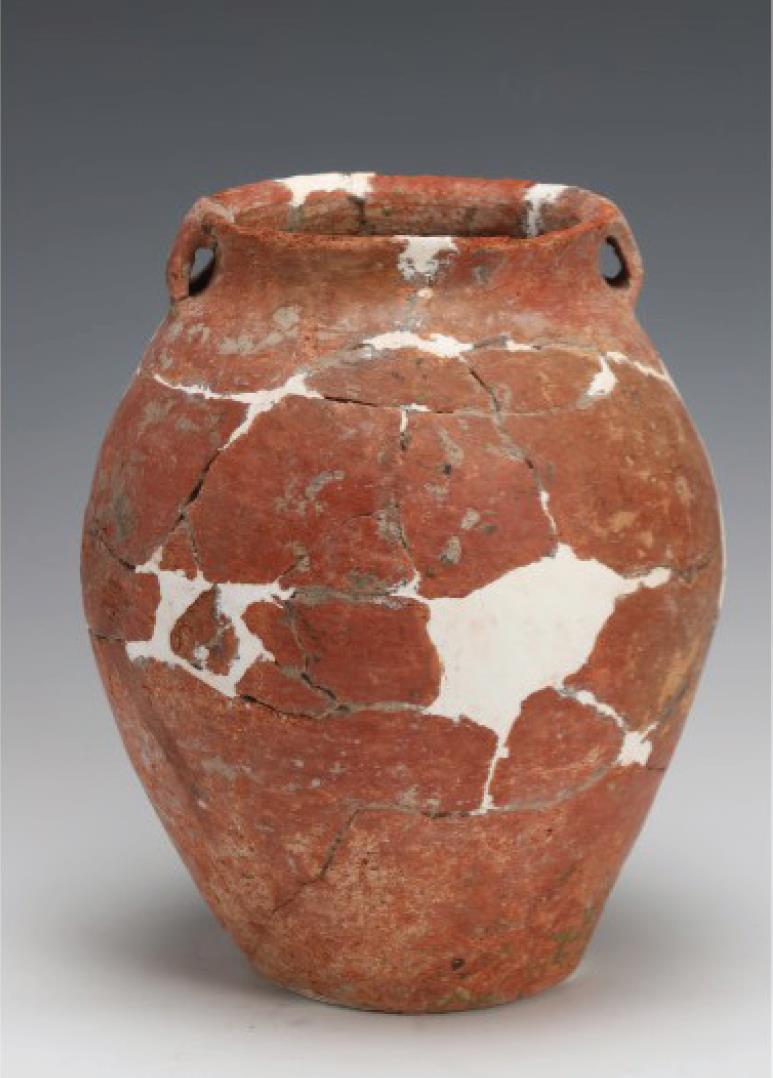
Pottery: Around 400 pottery pieces in various shapes and sizes were unearthed, including large-mouthed basins, flat-bottomed jars, bowls, and cups. Some pottery items were strengthened with clay mixed with rice husks and decorated with red pigment or stripe patterns.
Social Stratification: Three high-level tombs from the late Shangshan culture contained over 20 pottery items each, indicating the emergence of social differentiation around 8,500 years ago.
Cultural Significance
The Xiatang Site is a vital specimen for studying the early rice farming societies of southern China. It vividly portrays the early stages of Chinese agrarian society, which was based on rice cultivation. The findings at Xiatang have pushed the timeline of social differentiation further back than previously believed, challenging the notion that complex social structures supported by a rice-farming economy emerged only during the Liangzhu culture (c. 5300-4300 years ago). The site's unique settlement layout and social organizational structure provide valuable insights into the development of early agricultural societies.
Preservation Efforts
Efforts to preserve the Xiatang Site have been ongoing since its discovery. Supported by the National Cultural Heritage Administration, the site has been included in a collaborative research program aimed at studying the formation of early rice farming societies in the middle and lower reaches of the Yangtze River. Further excavations are planned over the next five years, focusing on uncovering and studying the contents, layout, and function of the site's earthen platforms.
Influence on Modern Understanding
The discoveries at the Xiatang Site have significantly influenced modern understanding of early agricultural societies and the origins of Chinese civilization. The site's findings provide crucial evidence for the independent origin and continuous development of China's cultural history, enriching the study of regional cultural evolution and the history of rice agriculture. The Xiatang Site stands as a benchmark for understanding the formation of early rice agricultural societies and the social structures that supported them.








